Fluent by Birth, Tested by Practice: How Heritage-Speaking Educators Turn Personal Language History Into Purposeful Teaching
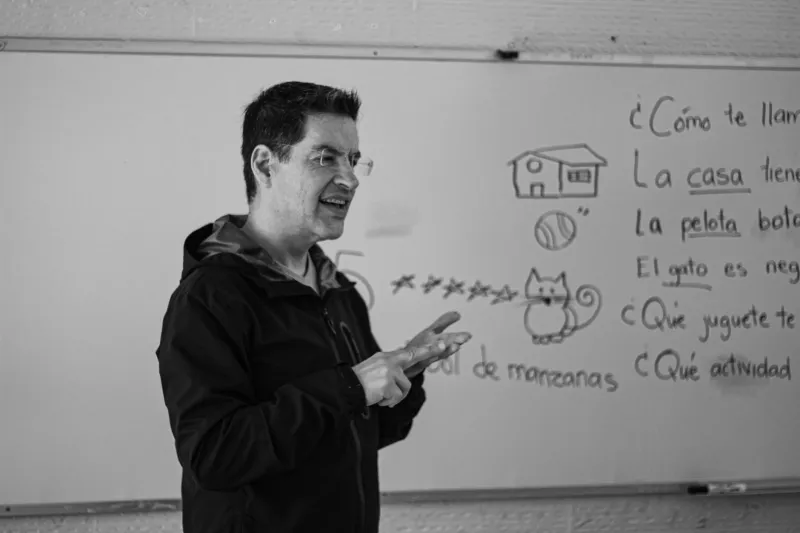
There is a particular kind of fluency that no classroom can manufacture. It lives in the cadence of a grandmother's storytelling, in the register shift between a family kitchen and a church pew, in the way a language reshapes itself depending on who is in the room. For educators who grew up bilingual or multilingual in the United States, this fluency is not an academic credential—it is a lived inheritance.
And yet, for all its richness, that inheritance does not arrive in the classroom without complications.
Heritage-speaking language educators occupy a genuinely unusual professional position. They are simultaneously insiders and outsiders: intimately acquainted with the emotional and cultural terrain of a language, yet often trained in pedagogical frameworks designed for instructors who acquired that same language through formal study. The result is a tension that, when left unexamined, can quietly undermine both professional confidence and classroom effectiveness. When examined with care, however, it becomes one of the most generative forces in language education.
The Weight of Assumed Expertise
One of the first pressures heritage-speaking educators encounter is the assumption—often made by administrators, colleagues, and students alike—that native or near-native fluency is equivalent to comprehensive linguistic expertise. In practice, the two are not the same thing.
A bilingual educator who grew up speaking Spanish at home in San Antonio may possess extraordinary communicative range in informal and familial registers while having had limited formal exposure to academic grammar terminology in that language. An instructor who acquired Mandarin as a heritage language in a Cantonese-dominant household may navigate complex code-switching with ease but feel less certain about standardized written forms. These gaps are not deficiencies—they are the natural contours of how heritage languages are acquired and maintained. But when colleagues or students project an expectation of encyclopedic authority, the pressure to perform seamless expertise can be both exhausting and professionally isolating.
Recognizing this dynamic is not an invitation to apologize for one's linguistic background. It is, rather, an opportunity to model something of real pedagogical value: the idea that language proficiency is multidimensional, that all speakers—including educators—occupy particular positions within a language, and that intellectual honesty about those positions is a sign of professional maturity, not inadequacy.
Identity, Emotion, and the Classroom
Teaching a language that is bound up with one's own family history and cultural identity introduces an emotional register that most professional development curricula do not address directly. When a student mispronounces a word that a heritage-speaking educator associates with a beloved relative, the correction carries a different kind of weight. When a lesson touches on cultural practices that the instructor has lived rather than studied, the line between personal testimony and instructional content can blur in ways that are difficult to manage in the moment.
This emotional labor is real, and it deserves acknowledgment within professional communities. Heritage-speaking educators often report feeling a heightened sense of responsibility for representing their cultural communities accurately and fairly—a responsibility that, while admirable in its intent, can tip into overcorrection or, conversely, into a reluctance to engage critically with cultural complexity for fear of misrepresenting one's own community.
The most effective approach is not to suppress this emotional investment but to develop what might be called reflective distance: the capacity to recognize when personal feeling is informing instructional decisions and to ask whether that influence is serving student learning or the instructor's own narrative. This is not a one-time exercise. It is an ongoing professional practice, one that benefits considerably from peer conversation and structured reflection.
When Lived Experience Becomes a Teaching Tool—and When It Shouldn't
The heritage-speaking educator's greatest classroom asset is precisely what makes the role complex: proximity to authentic language use. The ability to draw on real-world examples, to explain regional variation from firsthand knowledge, to demonstrate how a language functions across social contexts—these are capacities that genuinely enrich language instruction in ways that no textbook substitutes for.
The challenge lies in deploying that proximity with pedagogical intention rather than personal impulse. There is a meaningful difference between sharing a cultural anecdote because it illuminates a grammatical structure or communicative norm and sharing it because the moment felt personally resonant. Students benefit from the former. The latter, however well-intentioned, risks shifting the classroom's center of gravity from student development to instructor self-expression.
Practical strategies for maintaining this balance include:
-
Anchoring personal examples to explicit learning objectives. Before introducing a story or cultural reference drawn from personal experience, ask: what specific competency does this serve? If the answer is unclear, the example may be better reserved for a different context.
-
Inviting student experience alongside your own. In US classrooms, heritage speakers of many languages are often sitting in the audience as well as standing at the front. Creating structured opportunities for students who share a linguistic heritage to contribute their own knowledge—rather than positioning the instructor as the sole cultural authority—democratizes the classroom and validates a wider range of lived experience.
-
Being transparent about register and variation. When drawing on heritage knowledge, naming the specific register or regional variety being referenced helps students understand that languages are not monolithic. This turns personal linguistic history into a lesson in sociolinguistics rather than an implicit claim to singular authority.
The Professional Isolation Factor
In many US school districts and university language departments, heritage-speaking educators find themselves without colleagues who share their particular professional experience. The challenges they navigate—managing the emotional weight of identity-linked instruction, responding to misplaced assumptions about expertise, calibrating the use of personal narrative—are rarely addressed in standard professional development offerings.
Peer networks that bring together heritage-speaking educators across institutions and regions can provide something that formal training often cannot: the specific recognition that comes from shared experience. Within those networks, conversations about where lived experience ends and pedagogical responsibility begins tend to surface naturally and productively. The Language Teaching Network's community forums and curriculum-sharing resources offer one entry point for educators seeking that kind of professional dialogue.
Toward an Intentional Practice
The bilingual or multilingual educator who has grown up with a language is not a neutral transmitter of that language. They are a culturally situated, emotionally invested, professionally trained individual whose relationship to the subject matter is more complex than that of any other instructor in the building. That complexity is not a liability to be managed. It is, when approached with deliberateness, a pedagogical resource of considerable depth.
The work is to move from fluency that is inherited to practice that is intentional—to understand not just how one speaks a language, but why that particular way of speaking matters in a teaching context, and when it serves the student rather than the self. That movement, from the instinctive to the reflective, is where heritage-speaking educators often find their most distinctive professional voice.
And that voice, at its best, is one that no textbook has ever been able to replicate.